Thursday, February 2, 2012
Going public through the exchange? Why not go directly to the subscribers?
Chronicles of the Anonymous: The SOPA episode II
What exactly is SOPA?
Consider this blog entry an idiot’s guide to the Stop Online Piracy Act, albeit written by one who is no less an idiot than the rest of the world. As with everything I write about, I shall attempt as much as possible to dumb it down to the level of law students who, like me, are so detached from the outside world. Although, in my defense, I would say that what afflicts me (and most of the people I’m referring to) is more ignorance than plain idiocy. After all, was it not the great Confucius who said “Real knowledge is to know the extent of one's ignorance.” So, in the interest of real knowledge, let us discuss.
The Stop Online Piracy Act (SOPA), and its Senate counter part - the Protect Intellectual Property (PIPA), are distinct pieces of legislation pending in the U.S. Congress that address the same fundamental issue: Copyright Infringement.
The goal of SOPA (and the infinitely cuter sounding PIPA) is to crack down on copyright infringement by restricting access to sites that host or facilitate the trading of pirated content. The targets being foreign sites considered "rogue"-think: The Pirate Bay, torrentz, Torrenthub etc.
The bill was initiated by House Judiciary Committee Chair and Texas Republican Lamar Smith, along with 12 co-sponsors, on
To be continued…
Nathan J. Marasigan, Entry No. 7
Out of the Grind and Into the Wild
I have always loved animals. I live in a household that at one point accommodated two dogs, three cats, two rabbits, bunch of chickens, a myna bird, three pairs of lovebirds, mixed breed of fishes and several hamsters (the number varied if someone was pregnant). It wasn’t nearly a zoo but my siblings and I had a great time playing with our various pets. Of course, this love of animals doesn’t extend to being against eating chicken, beef or pork but I respect the life given to animals. They may not be human beings but they are still creatures of this earth that must be treated with dignity.

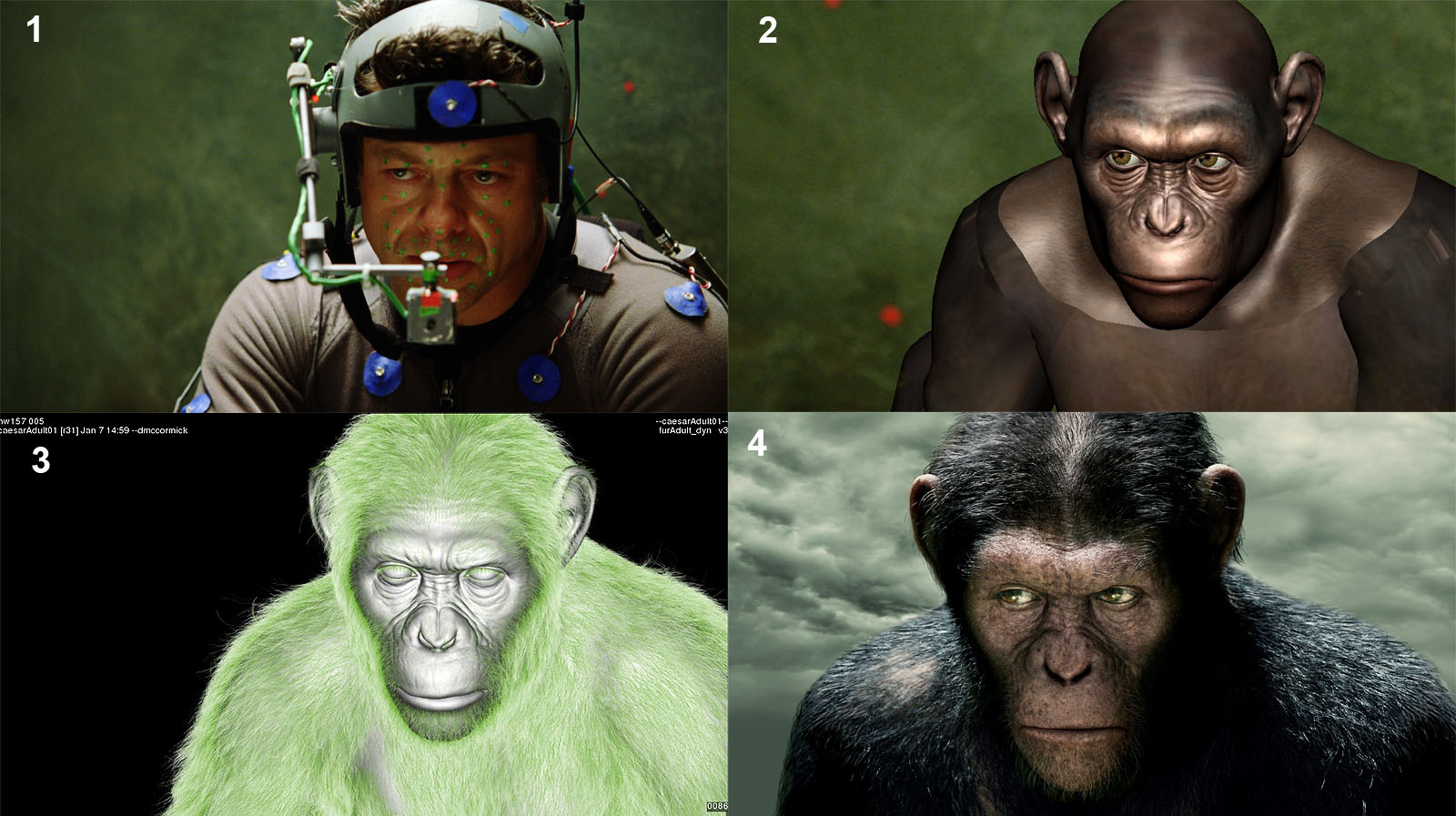
I recently watched the Rise of the Planet of the Apes, which by its title obviously has several apes comprising the cast. It was an enjoyable movie but an interesting thing about it was that there was no single animal used in filming. Ahhh the wonders of modern technology, specifically in filmmaking. The apes looked lifelike (not that I’ve seen them up close nor observed them for long periods of time) and their eyes were very expressive. At those emotionally charged points, I knew computer-generated imagery (CGI) was utilized to get these animals to look excited or devastated at the precise moments. I didn’t assume though that all the apes on screen were just graphics created using a computer. We appreciate and have come to depend on technology and the ease and convenience it gives to our day-to-day living. I never stopped to think how it also benefits our animal brethren who are trained, prodded and forced to go against their nature and act on cue.

In watching movies, I doubt that people spend a lot of time wondering about the welfare of the animals used in filming. In recent years, technology has made use of animals in shooting movies and television shows no longer indispensable. Animals appear on screen with the use of CGI so there is no need to use a real crocodiles as escapees from their zoo cages (Arnold Schwarzenegger’s 1996 film, Eraser) or use authentic penguins to poop in toilets (Jim Carrey’s 2011 film, Mr. Popper’s Penguins). This is a far cry from almost one hundred years ago, where in the 1918 film Tarzan of the Apes, the lead character actually kills a real lion (that was drugged) by stabbing it to death. In the 1925 film Ben Hur, at least one hundred (100) horses were killed in the course of the filming, mostly due to the chariot race scene. The most horrific and pointless use of an animal I’ve read was in the 1939 western Jesse James, where a blindfolded horse was pushed off a cliff to get a shot of a cowboy on horseback jumping into the water. As a result, the horse broke its back and had to be put down. As stated by Joyce Tischler, general counsel for Animal Legal Defense Fund, “I’ve been doing this for 30 years, and I’ve come to believe that from the perspective of wild animals, there is nothing good for them in entertainment.” It is indeed positive news for the animal kingdom that computer graphics and motion-capture technology will soon put animals out to pasture in show business. As wild animals, they ought to be in the wild.
Source: Time Magazine (January 30, 2012 issue), American Humane Association, CBC News
Candice See, Entry #7
WHAT'S GOOGLE UP TO THESE DAYS???
Last week, as I was surfing the net, my sight was drawn to this yellow box on the upper-right hand side of the screen containing a link that explains recent changes to Google's Privacy Policy. Clicking the thing, I was brought to a Google page that started with:
"We’re getting rid of over 60 different privacy policies across Google. . .This stuff matters, so please take a few minutes to read our updated Google Privacy Policy and Terms of Service now. "
Yeah right! Since I didn't have a gun to my head, I stopped reading further and immediately jumped to the bottom of the page, which said:
"March 1, 2012 is when the new Privacy Policy and Google Terms of Service will come into effect. If you choose to keep using Google once the change occurs, you will be doing so under the new Privacy Policy and Terms of Service."
Uh, okay.
I didn't bother to find out what Google had to say. As a student of law, I have enough reading backlog that would last me 'til the year 2037. Besides, I didn't intend to break my beloved tradition of never taking online nonsense like Disclaimers, Privacy Policies, and Terms of Service seriously. Skipping them has been a great cardio.
Make no mistake, I am a very private person, but I'm definitely not sadistic. I don't have the time to peruse paragraphs that are intentionally crafted to be incomprehensible. They are long, convoluted and contain a healthy dose of BS.
Instead of fielding information, they make you feel stupid. You actually feel less informed after reading those things. With veiled vagueness, they take your breath away. (And not in a good way.)
Documents like those would make fine instruments of torture for hardened terrorists in Guantanamo Bay.
Pero aba! When I opened my Gmail account there goes Google haunting me again with changes in their policy. I know this is not characteristic of the search engine giant. Like Facebook, Google prides itself with non disclosures and unilateral actions. So I guess this is really a big deal. But unless they title that thing with, 'John Lloyd at Shaina, Nagkabalikan', I'm not reading it.
http://noypitayo.com/wp-content/uploads/2012/01/John-Lloyd-Cruz-and-Shaina-Magdayao-Break-Up.jpg
Yes, I believe in Google. (For now). I don't think they will be stupid enough to alienate their users. I love it when they change homepage logo every so often -- like on Thomas Edison's birthday or when Pacman, the game, had it's 30th Anniversary.
As of the moment, I really don't know what's Google up to these days. If anyone out there knows, shoot me an email or text. I'll definitely appreciate it!
Diana Lutgarda P. Bonilla, Entry # 7
Wednesday, February 1, 2012
Zuckerberg goes Public!

Facebook is a vital part of people's Internet lives and safely, the most successful company in the history of social media. Facebook as of the early part of 2012 has at least 800 million active members. Its closest competitor, Google+, has less than a tenth the active membership — 60 million people.
A January 2009 Compete.com study ranked Facebook as the most used social networking service by worldwide monthly active users.Entertainment Weekly included the site on its end-of-the-decade "best-of" list, saying, "How on earth did we stalk our exes, remember our co-workers' birthdays and bug our friends before Facebook?"
It is therefore an exciting phase in the history not only of Facebook as a company on the one hand and its 800 million users on the other but also of the entire social media that Facebook is about to engage in an Initial Public Offering. The company is expected to file as early as this week to sell stock on the open market in what will be the most talked-about initial public offering since Google in 2004.
Around the United States and the world, regular investors and IPO watchers are anticipating some kind of twist — perhaps a provision for the 800 million users of Facebook, a company that promotes itself as all about personal connections, to get in on the action.
"Pandemonium is what I expect in terms of demand for this stock," says Scott Sweet, senior managing partner at IPO Boutique, an advisory firm. "I don't think Wall Street would want to anger Facebook users."
The most successful young technology companies have a history of doing things differently. Google's IPO prospectus contained a letter from its founders to investors that said the company believed in the motto "Don't be evil."
Facebook declined to comment, but Reena Aggarwal, a finance professor who has studied IPOs at Georgetown University's McDonough School of Business, believes Zuckerberg will emulate Google's philosophy, at least in principle.
Founders Larry Page and Sergey Brin wanted an IPO accessible to all investors, and said so in their first regulatory filing. Facebook may say something similar when it files to declare its intention to sell stock publicly.
Facebook is expected to raise as much as $10 billion, which will value the company at $75 billion to $100 billion, making it one of the largest IPOs. A stock usually starts trading three to four months after the filing.
The highly anticipated filing will reveal how much Facebook intends to raise from the stock market, what it plans to do with the money and details on its own financial performance and future growth prospects.
I guess we all just have to wait for further developments and be ready for whatever is in store for us care of the cocky but brilliant Facebook founder Mark Zuckerberg.
Source: Associated Press (Pallavi Gogoi)
Danjun Lucas
Blog Entry No 7
For the Love of Books

I’ve always loved being in bookstores and scanning all the awesome books that are stacked in endless rows of wooden shelves. I love how it’s usually quiet, with just a handful of people sitting on the carpeted floors, reading. And I suppose it wasn’t always that way, but I especially love how they encourage you to open the books and read them, even before deciding to buy it.
I think books are a tricky business. It’s difficult nowadays to engage someone in a page full of words when its much simpler, and much better for some to capture someone’s eye with pictures. But that’s the great thing about it I suppose. Words can bring about worlds that are limited only by our own imagination. It’s unlike any film where the viewer is fed somebody else’s creation with no other choice but to accept it as it is. Unfortunately, books don’t have the same appeal to most people.
A few days ago a friend of mine introduced me to Amazon’s Kindle. I thought it was pretty interesting because it had about 1,500 books, more than ¾ of which I hadn’t heard of. It took me about an hour just to decide which book I wanted to begin reading and even then, I was constantly changing my mind. I realized then that Kindle had an unfortunate effect on people in terms of their commitment to reading a specific book. Because there are so many choices, and so many that you can download for free, books have become somewhat dispensable. You read the first few pages, decide its no good, delete it and move on to the next. After all, there are so may of them anyway. It’s really quite unfortunate to be dismissed so lightly considering the amount of time the author probably put into that piece. I guess this is one reason why the actual manuscript seems more valuable. It’s a physical representation of someone else’s hard work that can’t be disregarded so easily. Digital forms are great. They’re cheap and are so easy to access. Even then though, nothing truly beats the real thing.