Wednesday, November 25, 2009

Cybermovements


This is not new, but I just realized recently how potent the internet has become as a venue for advocacy. It is not only a tool for dissemination of information and fostering awareness to a large sector of society; but rather, and more importantly, it gives a voice and a face to the marginalized and the needy, to those who otherwise will find it very difficult to put their ideas and causes in the mainstream.
This is especially significant in issues that the government and other vested interests purposely try to push into obscurity. Through their videos and pictures, people from all over the world could take an eyeful of the harsh and alarming situations of these people, experience even for a moment the ordeals that others have to put up with every day, and hopefully be moved into action.


Jen Paguntalan
Blog 2

Pervasiveness of the Internet (wow, motherhood statement?)


That was Gina Alajar on the fact that "The Buzz" used her Facebook Status and page to fuel the Manny Pacquiao-Krista Ranillo issue.


I found myself saying something similar months back.


Yahoo! Used to have Yahoophotos where you could upload your pictures in albums and organize it, ala Flicker or Photobucket. But when they closed down, they gave their users an option to automatically transfer the photos to other photo-hosting sites. I picked Photobucket. But since I can't remember the username and password, and it took time to load the site, I abandoned the account altogether, and was content on uploading pictures on my other social-networking accounts.


One night however, my sister asked me, "Ate, ikaw ba 'to?", referring to a picture of a girl used by a blogsite which promotes Filipinas as suitable wives to foreigners. And it was my picture!


The blog per se was not that bad. It was about the experience of a foreigner who married a Filipina, and was happy with his life, so now he wants to share to others the benefits of marrying a Filipina. But the title of the site was somewhat offending. And it screams "Filipinas desperate for foreigner husbands". And I was not that desperate.


Fuming mad, I wrote to the website developer and demanded that my picture be removed. I explained, as diplomatic as I could, that I was not against Filipinas who wanted to find foreigners as husbands but my parents raised me to be more than a housewife serving foreigners in a relationship called "marriage". Or something more diplomatic than that.


The website developer replied, saying that I should be "flattered" (and yes, with sarcasm)that they chose my picture and they would not have done so if I was not pretty enough. And to add insult to injury, sent me a link of the terms and conditions of Photobucket which allegedly states that whatever is posted on Photobucket could be used by other persons as it becomes public property. But to comply with my "demand" (yes, still with sarcasm), they would remove my picture. No apologies given. But they did remove my picture.


If that site was a fashion magazine site, I would not have felt offended. Or rather exploited. But at least I learned my lesson. And from then on, I made myself conscious of the privacy settings of all my internet accounts and hoped that this would never happen again. Gina Alajar should have done the same thing in her Facebook account too.


Pictures from 
http://www.spot.ph/files/2009/11/jinkee-krista.jpg
http://www.filipinaromance.com/blogpics/filipina_mail_order_brides.jpg


Video from 
http://www.youtube.com/watch?v=ZDErdZDDVo0

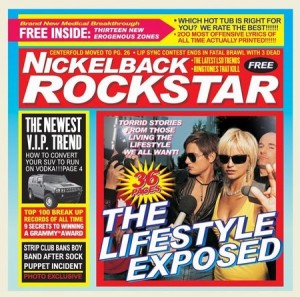
Rockstar Perks


When I was still a kid, I wished to become a rockstar. It's a cliche ambition, and it's probably one of the most frequent answers adolescents give when asked what they want to be when they grow up. In urban parlance, a rockstar is defined “as someone who is in a popular rock band. Some of these guys live the craziest life that exists. They tour around the world to play their music while getting worshipped by their fans. After the concert they f[**]k a bunch of groupies and leave for the next gig while taking some drugs” (definition from http://www.urbandictionary. com/define.php?term=rock+ star).

Well, I probably won’t go as far as f**king a bunch of groupies while taking drugs, because the usual connotation of being a rock star is having a cool life in which there is absolute freedom of action and also boundless expression through music. Since it's more of a lifestyle, the term rockstar has been extended to include not only those who are in well-known bands and engage in the activities abovementioned, but also those who have a lifestyle similar to such. Justin Timberlake, Avril Lavigne and Hannah Montana for example, have been considered rockstars, probably owing more to the way MTV gave another connotation to the term than to how they used the songs they composed to depict their rockstar lives (and yes, even though the genre of their music is categorized as pop music).

Those are the perks.

One thing about being famous is that all eyes are on you. If you were a rockstar and you did something really scandalous or humiliating, expect it to spread in the internet like wild fire. Some examples of this are what happened to Lady Gaga (http://www.youtube.com/watch?v= MheF1fexck0), Beyonce (http://www.youtube.com/watch?v= 0dhdeIca G6E), and even the recent mistake in the dance performance of Jennifer Lopez in the 2009 American Music Awards. The internet helps a lot to achieve a rockstar life, because it spreads the news on the artist, whatever gimmick their publicists have to package and gain fame for such artists. However, it also has some disadvantages, like the way it spreads both criticisms, bad news, and humiliating stuff around, probably faster than the good/positive PR the said publicists were able to circulate.

In recent years, I do find ironic how rockstars live their lives so flagrantly and yet require privacy in their lives. The internet is one of their most used mediums in disseminating information on their upcoming albums, gigs, and music videos, yet they despise it so much when time comes that humiliating news on what they do, which are generally their own fault, crop up in YouTube and Facebook. That's probably the trade-off of becoming a rockstar, fame on the both the fancy and the humiliating facets of life.


So, do you still want to be a rockstar?

Deliciously Deviant


On DeviantArt.com, you can be anything you want - a 3D animator, an abstract artist, even an independent filmmaker. You can be an experimental photographer, or a wannabe novelist. I mean, why not, when you can call yourself an Angelie Jolie fetishist, or even a pornographic connoisseur?

A site for anyone and everyone who'd like to show others their works of art (and maybe get some feedback on them), DeviantArt gives amateur artists a chance to strut their stuff. Some Deviants do it for profit, selling prints of their work or accepting commissions. Other Deviants do it to relax, to blow off some steam and maybe unwind after a long day at work (or school). Bottom line is, though - and as cheesy as it sounds - I think all Deviants do their art for the sheer joy of it.

It doesn't matter if nobody can tell whether that round thing on top is a head or a watermelon, or if those stick-like things underneath are limbs or the prongs of hell reaching up to pull it in. It doesn't matter if that dark red blob over there is a puddle of blood, or an accidental blot on the artist's work from when his inking pen failed him. There is, after all, always that one word no one would dare contradict - "abstract."
Of course, by making your work available to the general public, the issue of intellectual property rights arises. When uploading your work, DeviantArt gives you the option of using a Creative Commons license, which you can customize in order to allow others to use, copy and share your work while giving you credit. Creative Commons is a non-profit organization with, according to them, a "mission" to expand private rights to create public goods. By choosing to use a Creative Commons license, you end up offering some of your rights to any of the public, but only under certain conditions. If you, for instance, select a Non-Commercial license, you are allowing others to copy, display, distribute and perform your work, as well as derivative works, but only for non-commercial purposes. Once you've taken a license, you get a Commons Deed (a summary of the license), a Legal Code (the fine print necessary to ensure that the license will stand up in court), and a Digital Code (a machine-readable translation of the license that helps search engines and other applications identify your work by its terms of use).

The thing is, if you don't know who exactly has been viewing your work, how can you be so sure your rights will be respected? You don't even know how reliable Creative Commons, as an organization, is.

Ah, well, the choice is yours, of course. As for myself, the wannabe in me has chosen to assume the risk. ;)


[end, blog no. 2; images are entitled "Belle" by Loish, taken from http://loish.deviantart.com/, and "The Ocean Above" by Nienna, taken from http://nienna09.deviantart.com/, respectively]

Tuesday, November 24, 2009

Re-examining the Territoriality Principle in Relation to Libel


The increased use of the Internet makes the prospect of electronic libel suits more real than it currently is. In my first blog entry, I tackled the issue of classical legal interpretation of libel compared with a progressive interpretation of the term. My comments there assume that the libel is between the persons physically present in the Philippines. What if libel is committed by a person outside of Philippine territory against someone in the Philippine territory?

The New Civil Code and the Revised Penal Code both enunciate the principle that crimes are territorial by nature. Lex loci delicti commissi. Can a libel “victim” file a criminal complaint here in the Philippines? Where is the situs of the crime?

The expected answer from a classic legal interpretation is that, a suit for libel where the perpetrator is outside of the Philippines cannot prosper in this jurisdiction. Physical presence of the perpetrator in the Philippine territory is a condition sine qua non.

An alternative analysis is possible. The last act (publication), which consummated the libel took place in the Philippines when the public (in the Philippine territory) viewed the libelous material.

The alternative analysis is akin to a situation where a person in the US side of the US-Mexico border shoots someone in the Mexico border. The crime is consummated in Mexico since the last act giving rise to the crime took place in the Mexican side. Mexican Courts have jurisdiction over the crime.

Now, jurisdiction over the person is of course, another issue. Whether jurisdiction over the person of the accused can be obtained depends on the presence of an extradition treaty between the two countries.

Internet Libel however, is not as simple as the situation in the preceding paragraph because of the issue of situs of the crime. How do you locate the Internet for purposes of establishing the contact points necessary for jurisdictional purposes? Corollary to this, it may be asked: Is the Internet defined by the location of the Internet Service Provider? Or perhaps, the place or location of the host of the website where the libelous material was posted?

Is the victim therefore left without a viable remedy? I submit that a possible remedy exists, albeit not criminal. The aggrieved party may still avail of the independent civil action for damages for the libelous imputations (Article 33 of the New Civil Code or the NCC). Although the NCC mentions “defamation”, there is jurisprudence to the effect that the term does not merely refer to oral defamation but also written defamation.

The classic jurisdictional issue of course is whether or not jurisdiction can be obtained over the person of the defendant can be obtained considering that a civil action under Article 33 is an action in personam. Extraterritorial service of summons is not available unless you convert the action to one in rem by attaching property of the defendant, if any, in the Philippines.
It must be noted however that the canons of strict interpretation do not apply to civil cases. The Rules of Court has room for creative interpretation to resolve the procedural problem of obtaining jurisdiction over the person of the defendant. The book of Prof. Pangalangan and Justice Coquia (2000) on Private International Law cites jurisprudence explaining the increasing shift of emphasis from territoriality to minimum contacts and fundamental fairness in the United States for jurisdictional purposes.

The possibility of the adoption of the doctrine of minimum contacts and fundamental fairness is higher in civil law than in criminal law. In electronic libel, this could mean a possibility of a qualitative assessment of contact points between the aggrieved party and the internet, or the internet and the concerned public.

I say “possibility” of adoption because the expansion of libel law and jurisprudence to areas not originally contemplated by our statutes raises the spectre of purely policy question. “Policy” questions as we know, generally fall within the realm of Congress, being purely political questions.

Monday, November 23, 2009

team edward? team jacob? team pacquiao!!!


(second entry - Rowena Ricalde)

team edward? team jacob? team pacquiao!

Photoshop images of famous people always makes us laugh - or cringe. Ever since photos came in digital form and users of photoshop or corel learned to edit blemishes and, nowadays, manipulate entirely any photo, we can always see satirical photos (just like the ones above) and super vamped up pictures of models that do not represent the true state of their bodies. Remember the controversy of Angelica Panganiban's Ginebra calendar photos or the more recent photoshopped hip of Demi Moore in her W Magazine cover (see http://omg.yahoo.com/blogs/a-line/demi-moores-w-cover-worst-photoshop-ever/306).

Clearly, photos can be manipulated. No wonder a lot of courts nowadays disregard photo evidence since it can be manipulated. This is not only true in the case of photos but with videos as well. Unless you have the negatives as proof, gone are the days where the picture paints a thousand words in a court room.

On a lighter note, whoever did this photoshop of Pacman as Edward Cullen - kudos!

(pictures of Pacman and New Moon came from a forwarded email)

FBI: FaceBook Investigation

Canadian woman loses benefits over Facebook photo.

It was an article on yahoo webpage this morning. It was about a woman on long-term sick leave for depression who lost her benefits because her insurance agent found photos of her on Facebook in which she appeared to be having fun at a bar, at her birthday party, and on a holiday. Her defense was that upon her doctor's advice, she tried to have fun.

Social networking sites have been increasingly being used by school administrations, employers and officers of companies, and law enforcement agencies as a source of information/evidence against users. Fourth year UP Law students are using Facebook to "investigate" about their OLA clients and opposing counsels! Haha.

Last week in class, we discussed about the legal and policy implications of technology. Indeed, things are happening so fast that it seems impossible to keep up.

Now, imagine opening your Facebook account and finding an invitation - not to connect to an acquaintance - but to show up in court. That may be the direction where we are headed, at least in the aftermath of a case in Australia, where a judge granted lawyers permission to serve defendants with a default judgment via Facebook.

Exciting huh?

-Glaisa PO
2nd Entry