Church traditions are entering the online community. Recently, e-burol and e-libing --services offered by St. Peter Life Plan Inc. which allow friends and relatives take part in the wake and interment of a deceased loved one--intrigued people traveling along Quezon Avenue. This solicits mixed reviews and feelings since it substitutes for the physical presence of the relatives who are, by Filipino tradition at least, ought to be there, physically present, at the wake. This also poses the question "how much privacy can this facility offer?" At the company's site, it says that not everyone will be allowed to view the online service since a username and password provided by the family members will be required from the users. However, I ask, can the users record it? Can they eventually send it to other relatives who were not able to attend online or offline? Can this be posted on Facebook? Do family members agree on some terms for the file? Is the file a family property? Who owns the file?
Which brings me to another ecclesiastical sacrament: Confession.
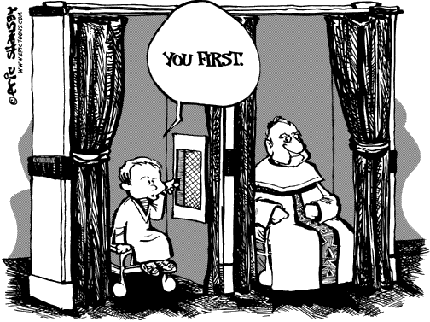
In 2008, CNN wrote an article about the emergence of online confessions--not the type you read in Cosmopolitan and FHM--but consist of the same stories only that when one narrates, one asks for forgiveness. To be absolved of your sins is your only ticket to communion, at least for Catholics. Hence, people, or at least me, were told to receive this sacrament at least once a month. But for a busybody like a law student, repentance for sins committed may not be convenient amidst 5000-page of cases. I asked a priest friend if he allows online confession and I was told that the Vatican does not approve of it. "Have discipline and order and put going to the sacrament part of your schedule."
I have nothing against writing your sins in your computer, whether you hit send or not. You try to unburden where it feels like you have to, be it inside the church, while walking around the academic oval or before you go to sleep. When the spirit moves you, you allow it. When you are wrong and you want to admit it, typing it on the keyboard may not only be cathartic but also healthy.
But does the priest have the right to publish your email? Does the church own the copy of the online confessions? Will they violate not only their priesthood vows but also the law in their disclosure? Can the online confessions be admitted as evidence and be not protected by privileged communication? Can it be used as an excerpt in some of the priests' publications such as blogs, articles and books? But the question has been answered by the Vatican--no to online confessions.
Forgiveness cannot be downloaded nor sent through email or chat. At least for the Vatican. I have nothing against it. If I am wronged, I may also have preferences as to how a person would best say sorry, like return what he or she does not own. I would prefer too that my loved ones surround me when I depart this beautiful world. Because there are some things that cannot be sent through IP addresses.
By Paulyn Duman
Blog #1
Other blogs:
IMHO: Digitized sins are forgiven
IMHO: UP College of Law should improve its cellphone signal reception
IMHO: Media diet is good for students and teachers